Many missing teeth
When most or all teeth in the upper or lower jaw are missing, All-on-X provides a fixed replacement for them.
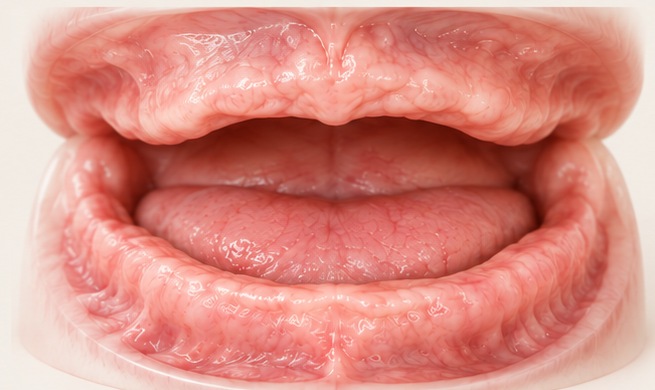
If you or a family member has most teeth missing or failing, this page explains what All-on-X is, who it may suit, and what to ask before deciding.
A detailed assessment is what tells you whether All-on-X suits your needs, your health and what you want from treatment.
When most or all teeth in the upper or lower jaw are missing, All-on-X provides a fixed replacement for them.
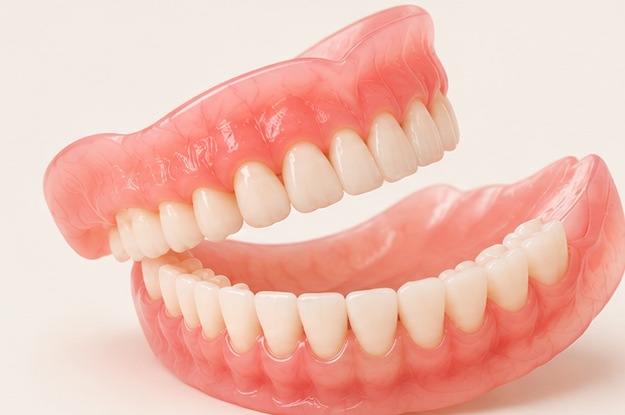
When dentures move, rub or make eating and speaking uncomfortable, All-on-X offers a fixed option that stays in place.
When most teeth are badly damaged, loose or repeatedly causing problems, it may be time to consider whether saving or replacing them is the better long-term option.
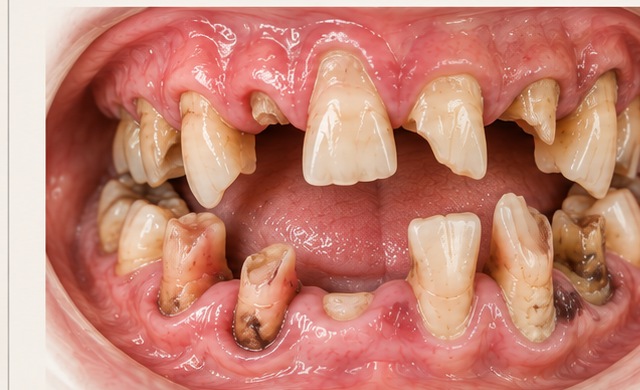
Not sure whether any of these describe you? A scan and an examination will tell you.
↗Ask if All-on-X suits youAll-on-X replaces all the teeth in the upper or lower jaw with a connected row of fixed replacement teeth, supported by several dental implants. Rather than using one implant for every missing tooth, the implants are carefully planned to carry the entire arch.
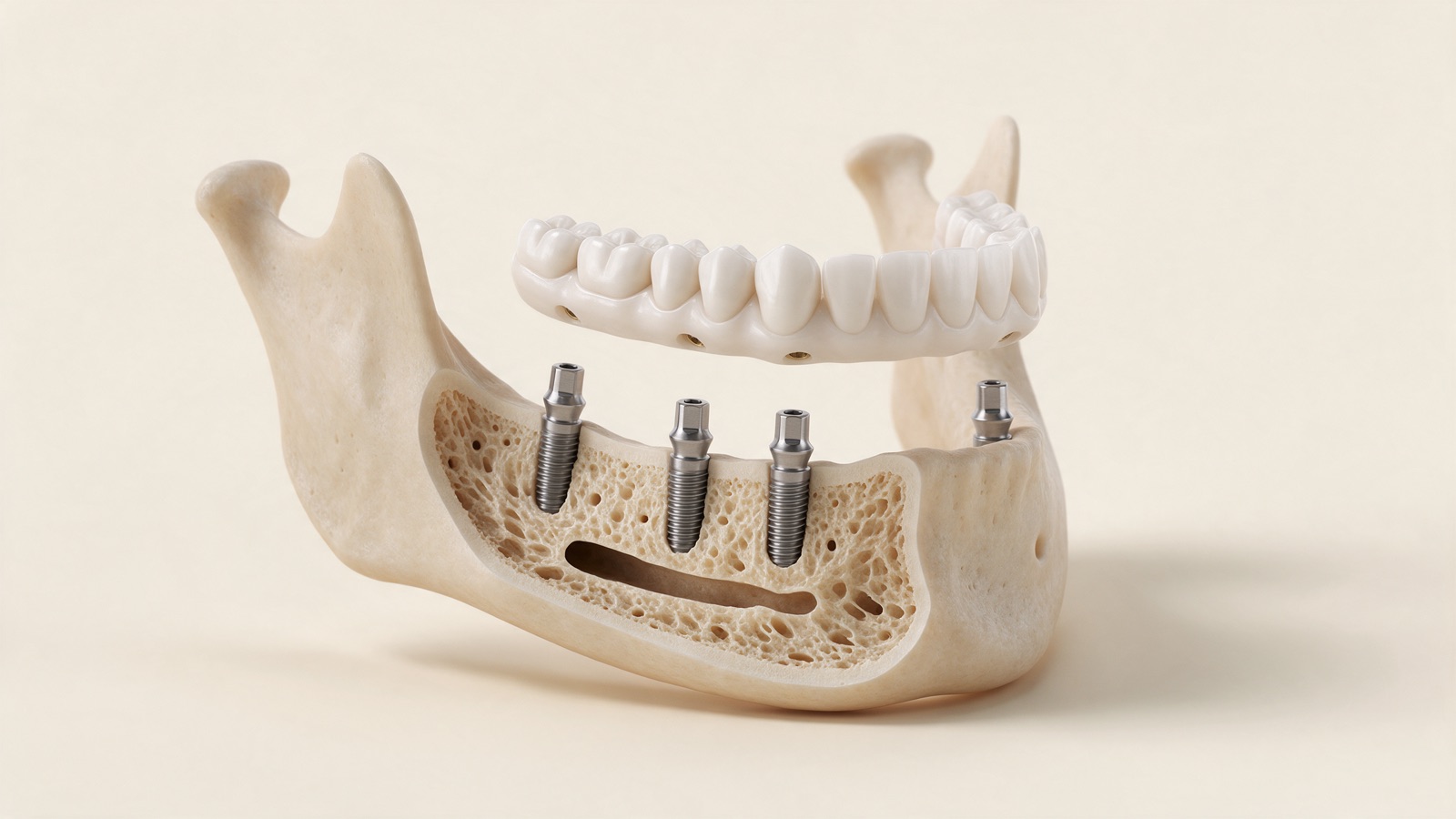
Implants sit in the jawbone and support a connected set of replacement teeth. The implants, your new teeth and your bite are planned together, not as separate parts.
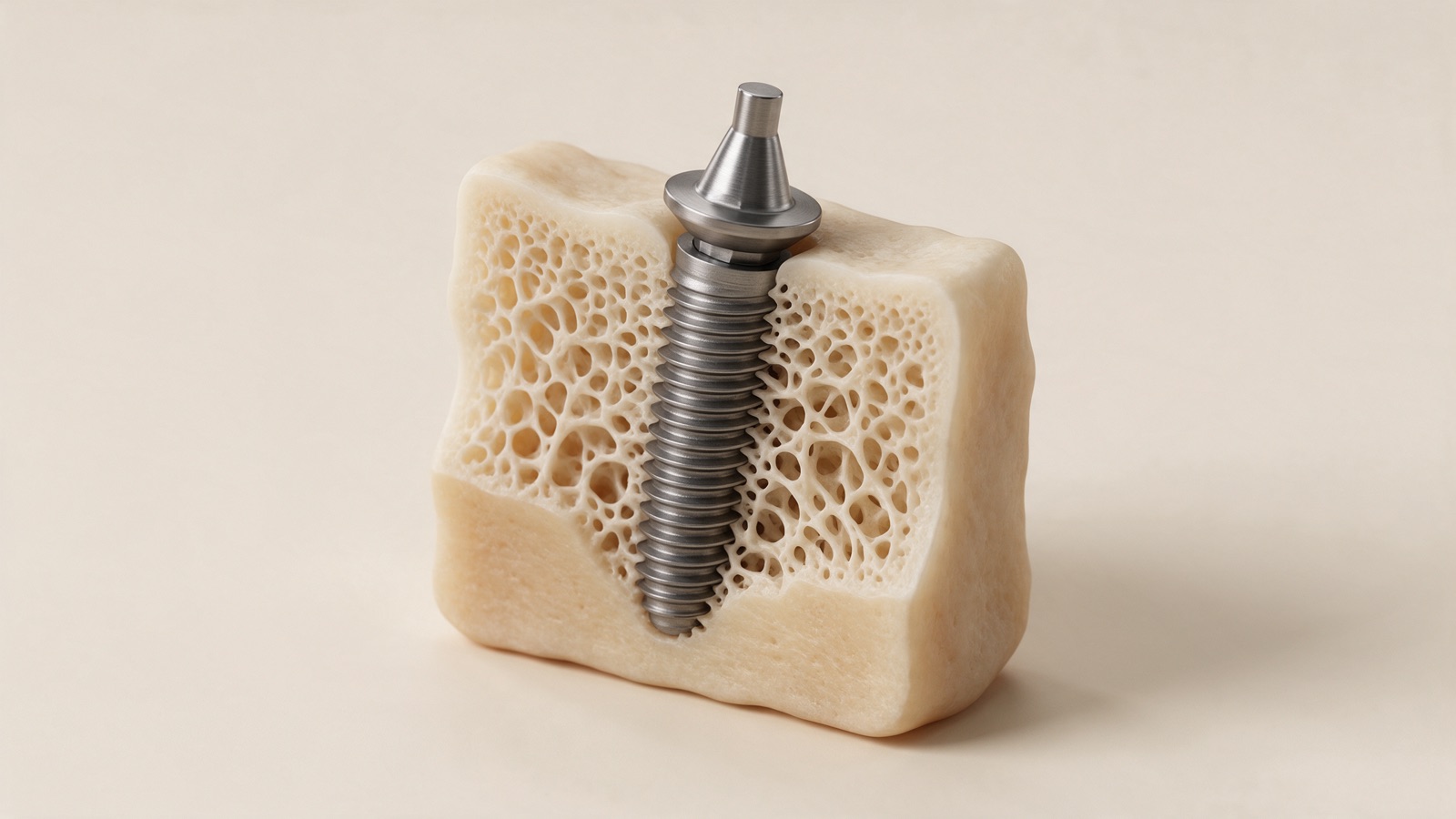
Titanium implants are placed in the jawbone to support a connected set of replacement teeth. During healing, the surrounding bone heals around the implant, providing a stable foundation.
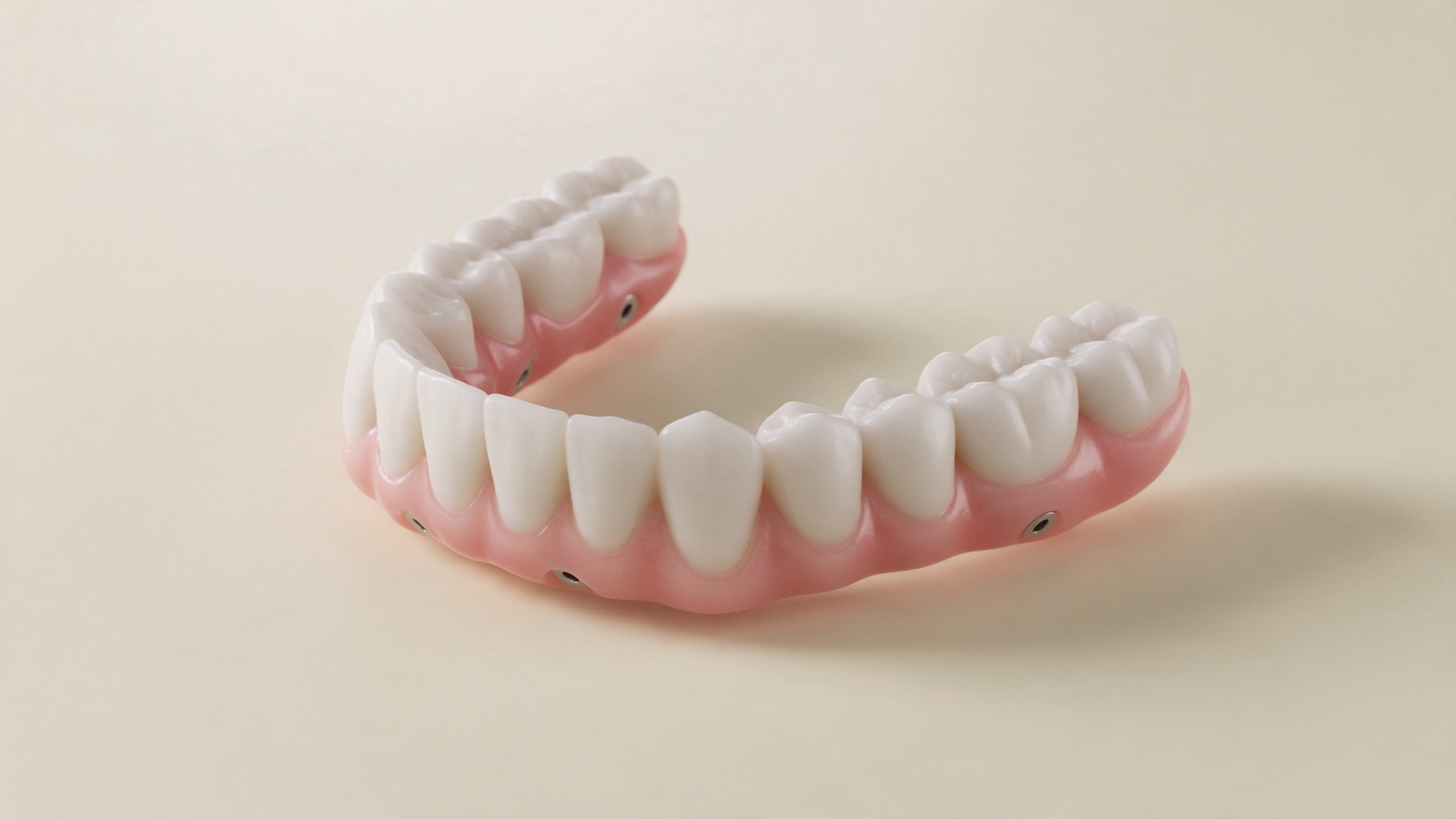
The replacement teeth are made as one connected full-arch restoration. High-strength zirconia is used for its strength, durability and natural appearance.
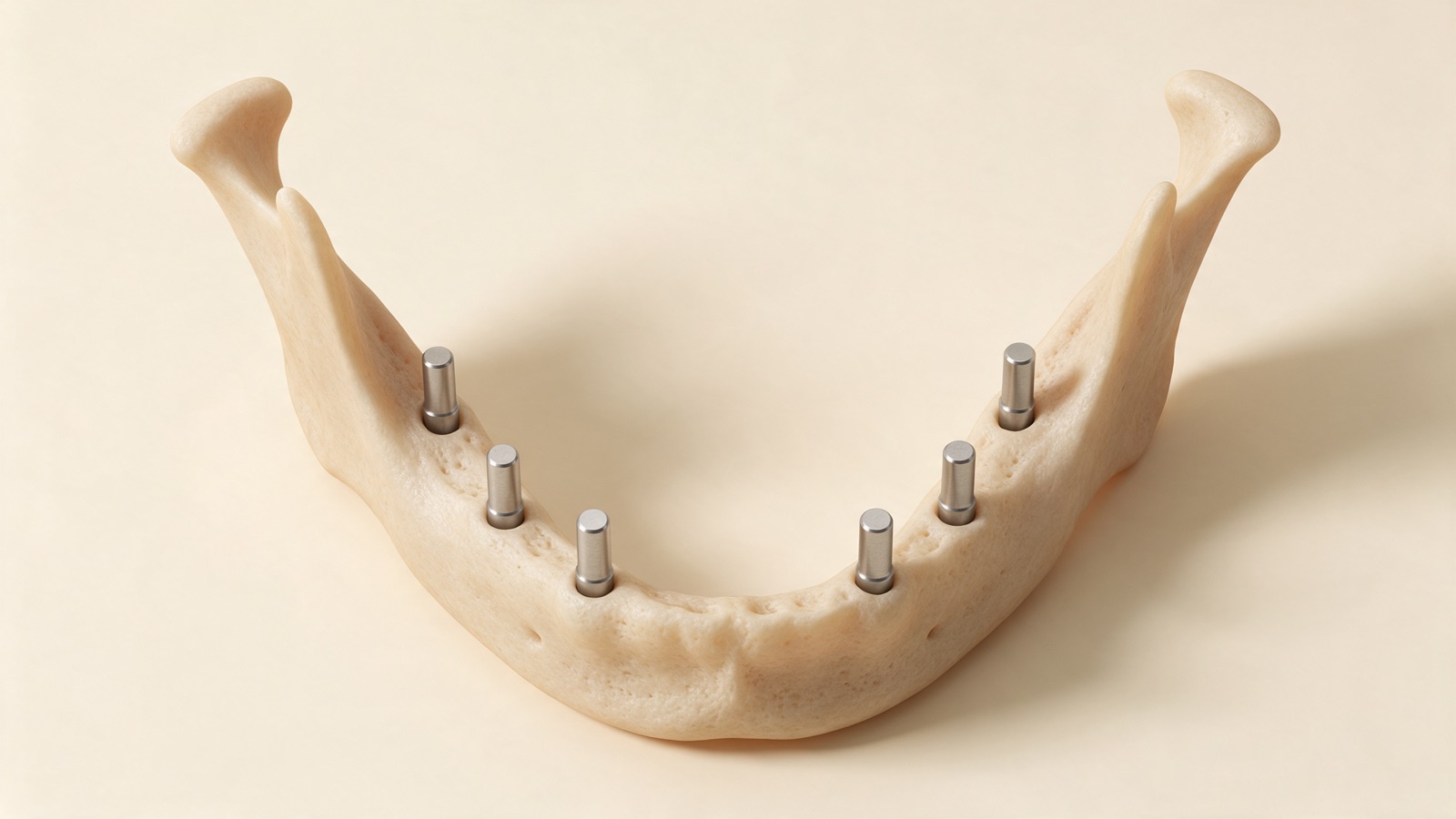
The “X” is the number of implants supporting the full arch. Commonly four or six, depending on your jawbone, your bite and your individual treatment needs.
Have more questions? We’re here to help.
↗Talk to the implant teamFor suitable patients, a fixed full-arch restoration offers practical benefits. The result depends on your oral health, the design, healing and ongoing care.
A fixed restoration makes everyday chewing more comfortable than a loose denture does.
Supported by dental implants, the teeth stay fixed in place without daily removal like dentures.
With less movement than a loose denture, fixed teeth help you feel more comfortable and confident when speaking.
The shape, arrangement and appearance of your teeth are planned around your face, smile, speech and bite.
The benefits depend on your individual condition. A consultation can help you understand what’s possible.
↗Book a consultationTreated at Esteem Dental Clinic and shared with consent. Outcomes vary from patient to patient.
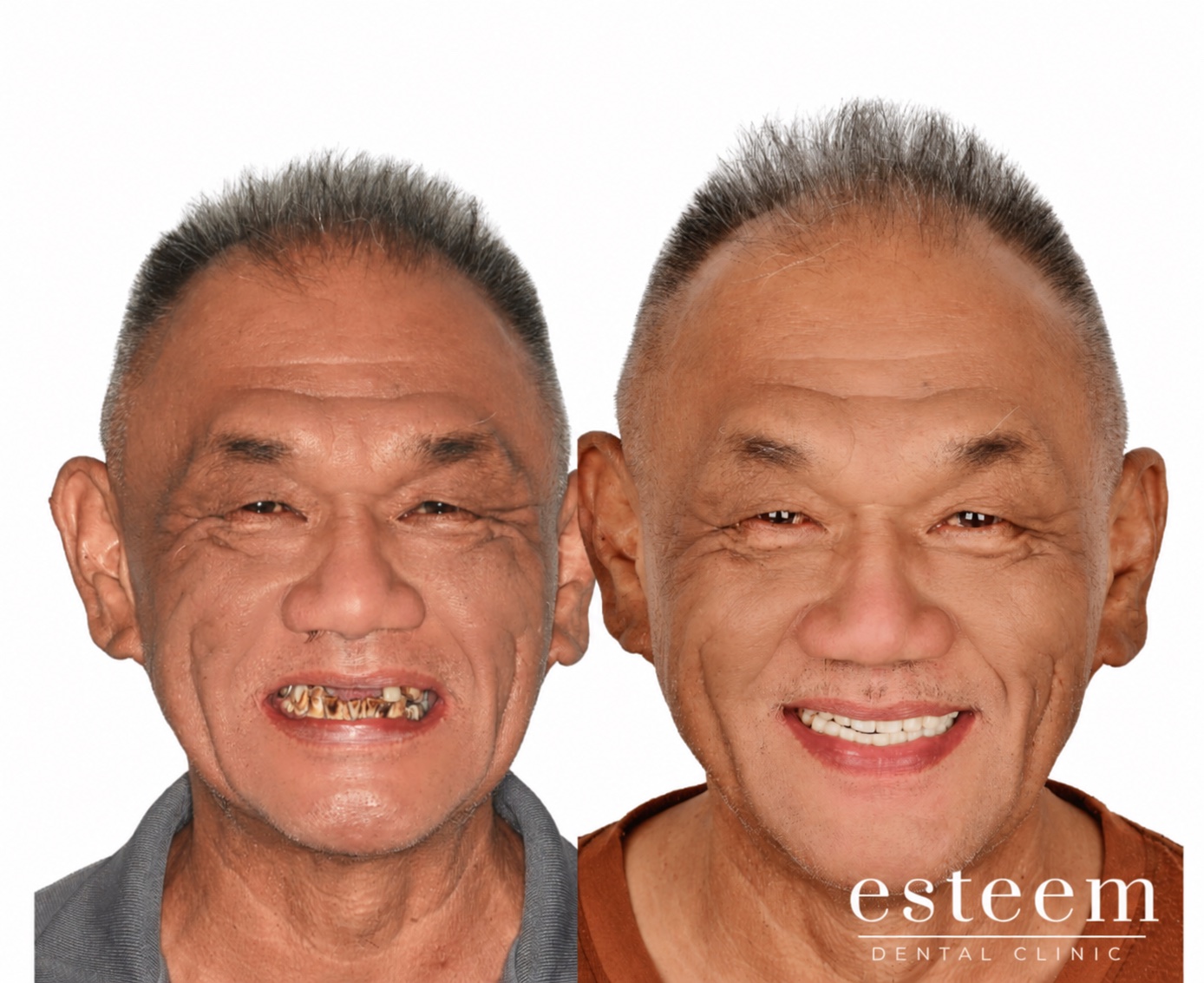
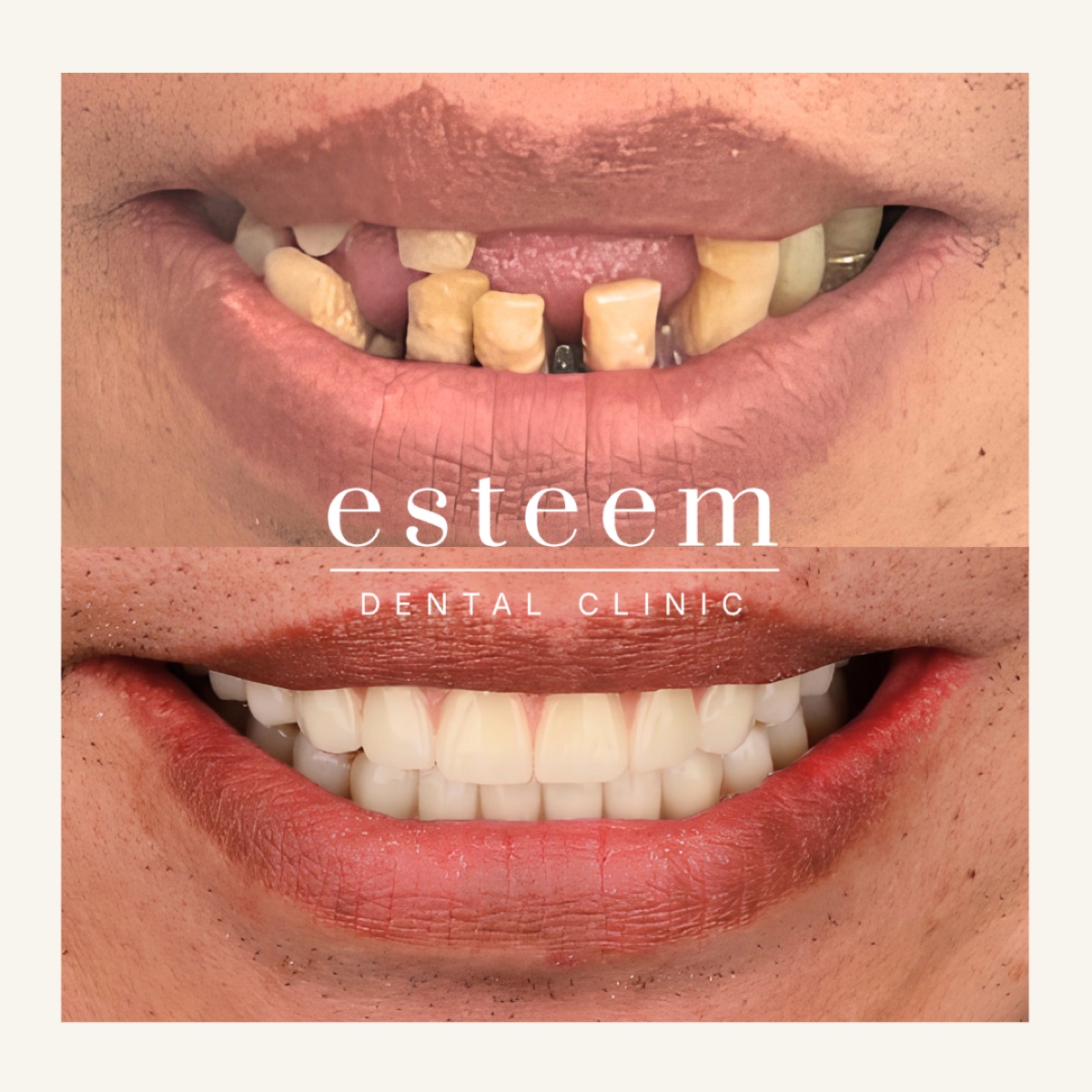
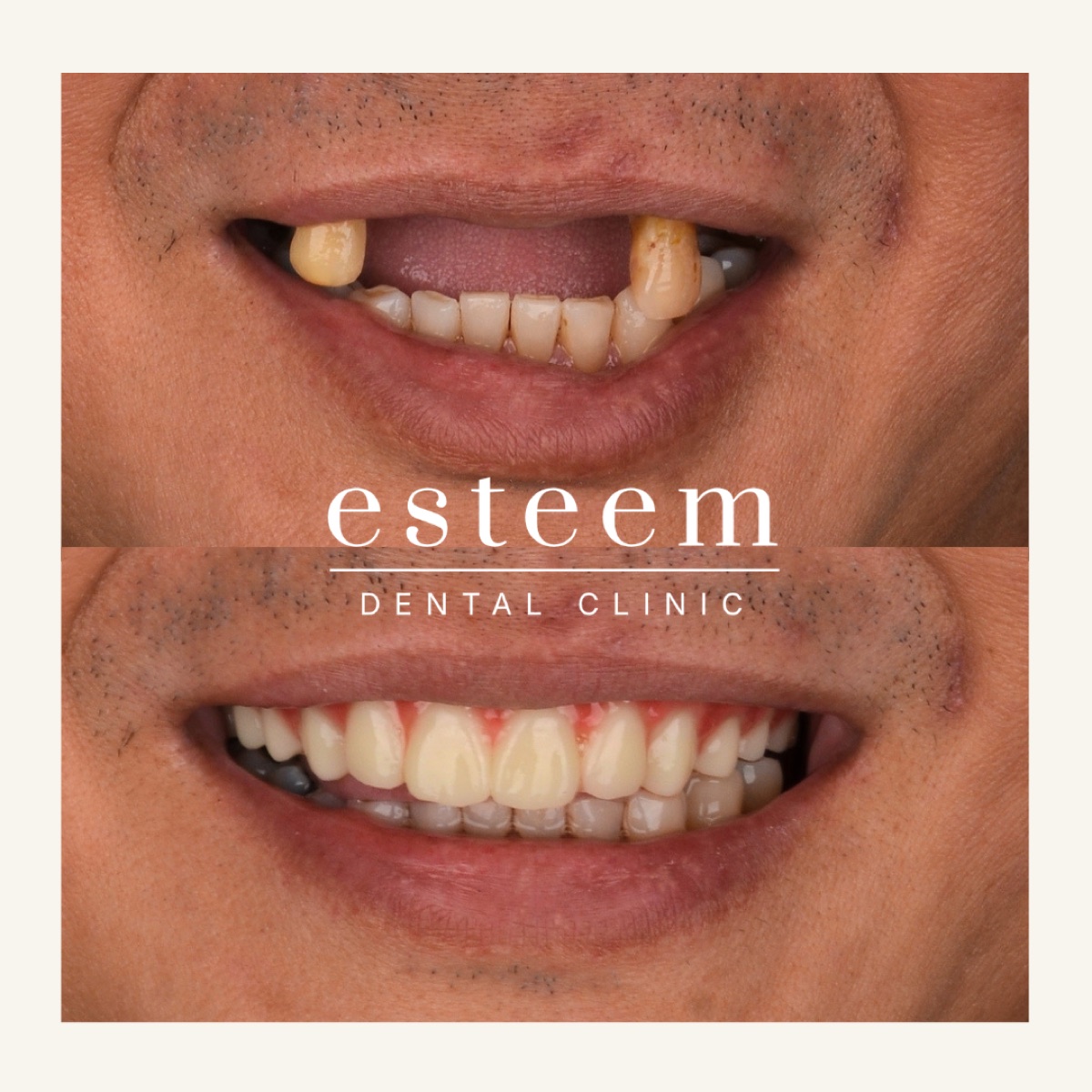
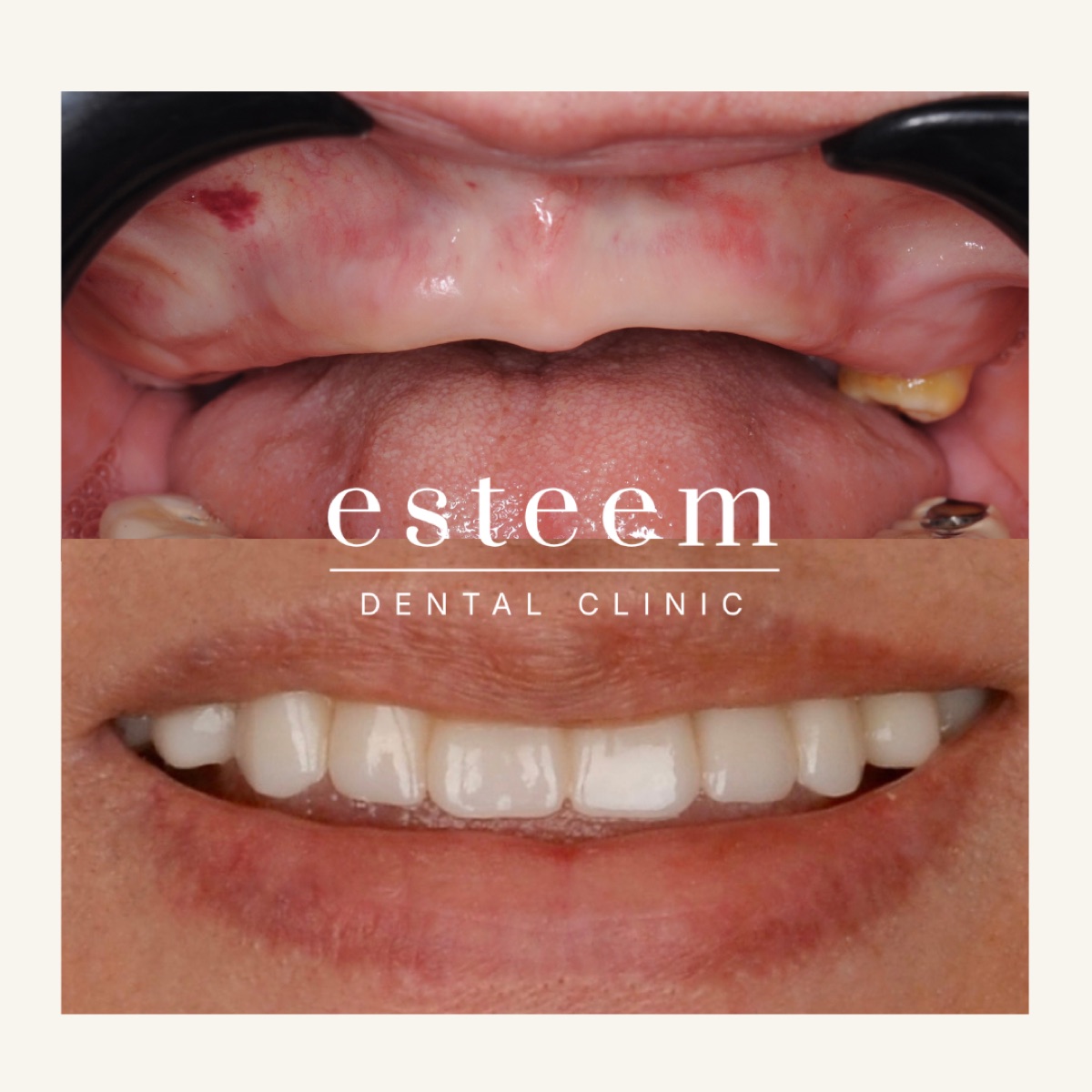
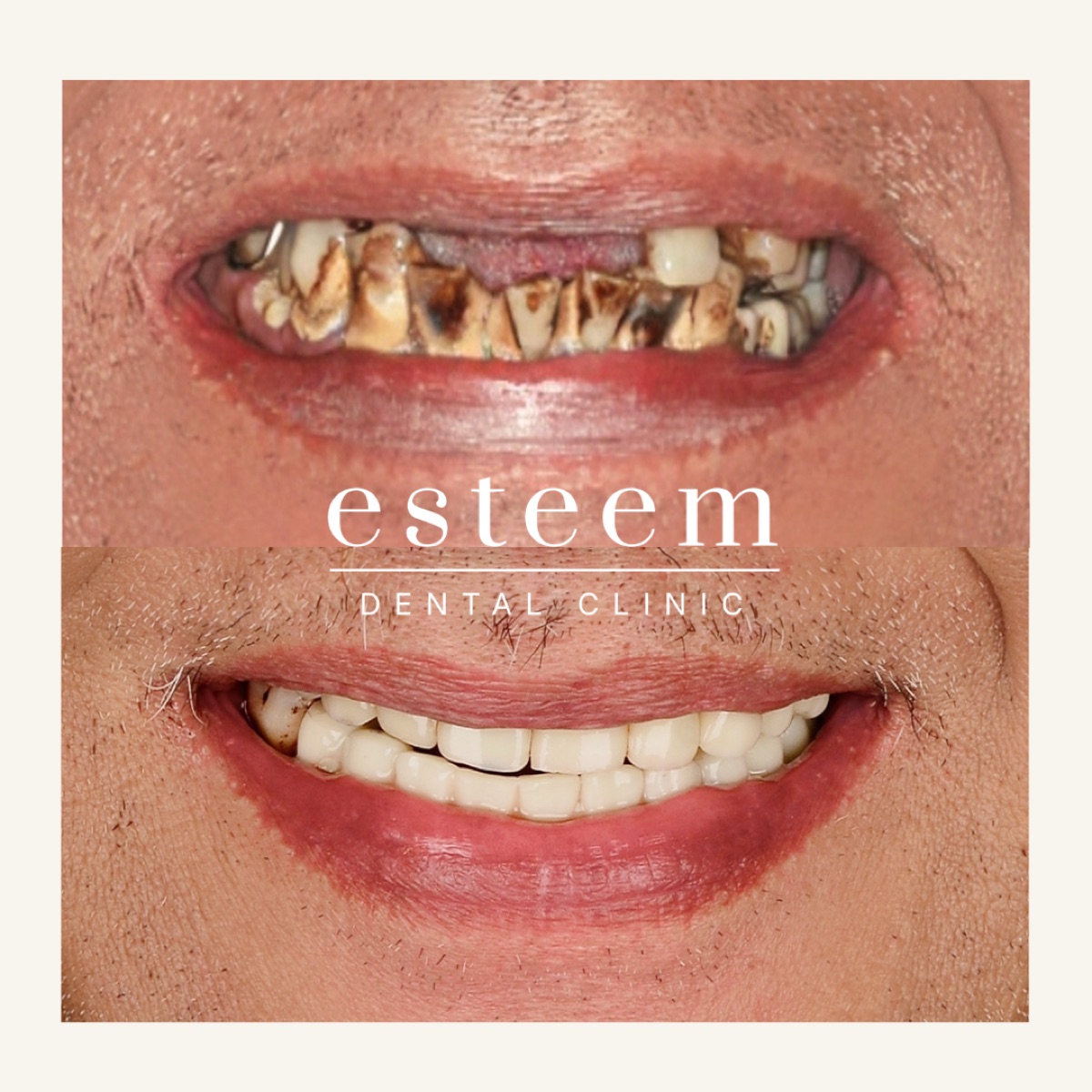
Want to see more patient results? Ask us about similar cases during your consultation.
↗Ask to see more casesAll-on-X is more than a single procedure. It is a carefully planned journey from your first assessment and implant placement to healing and your final teeth.
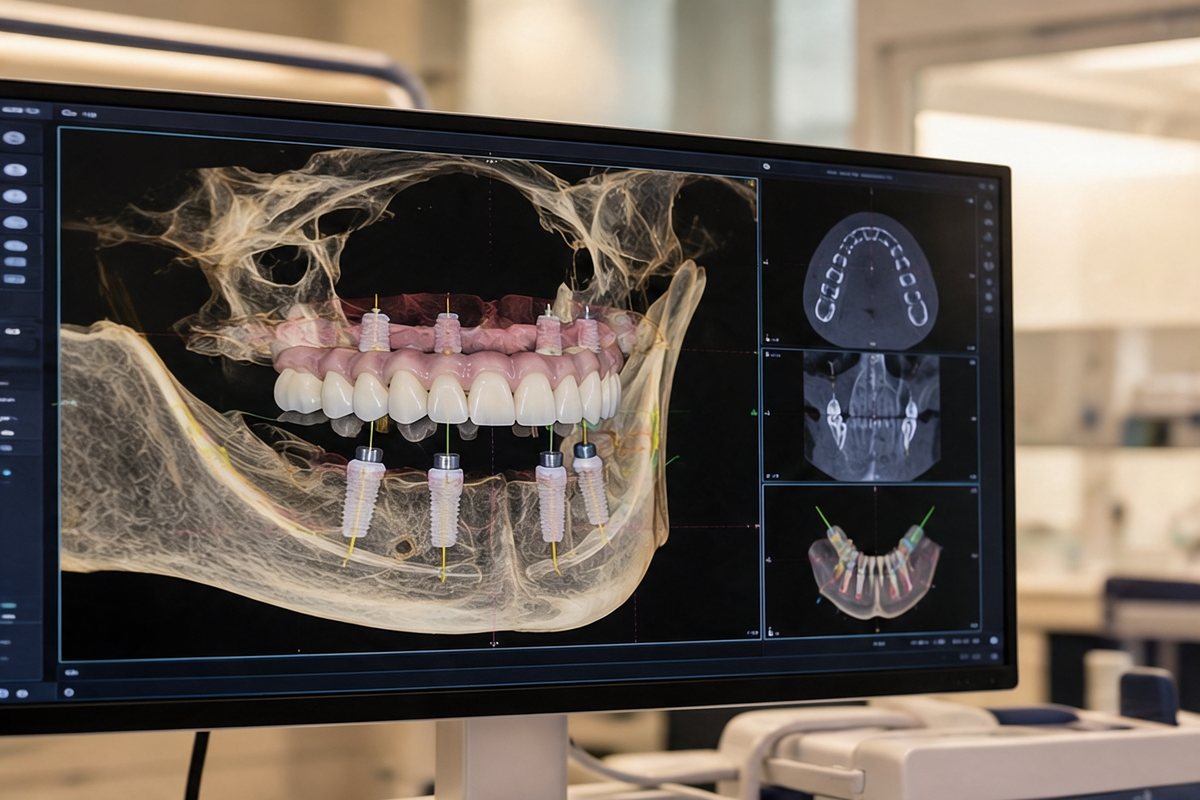
A clinical examination, CBCT scan and digital scans give a detailed view of your teeth, gums, jawbone and bite. These records let the implant positions and the replacement teeth be planned together before surgery.
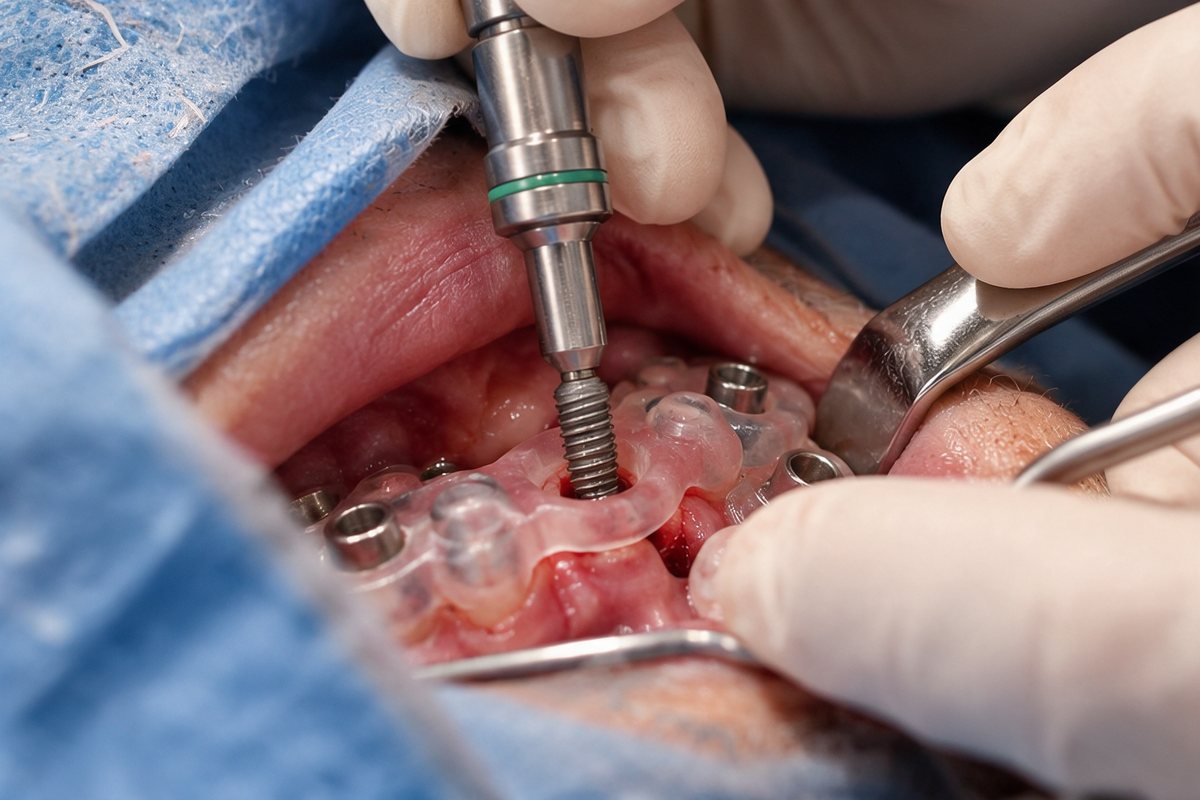
The implants are placed in one surgical appointment. A custom surgical guide or dynamic navigation helps the dentist follow the digital treatment plan for precise implant placement.
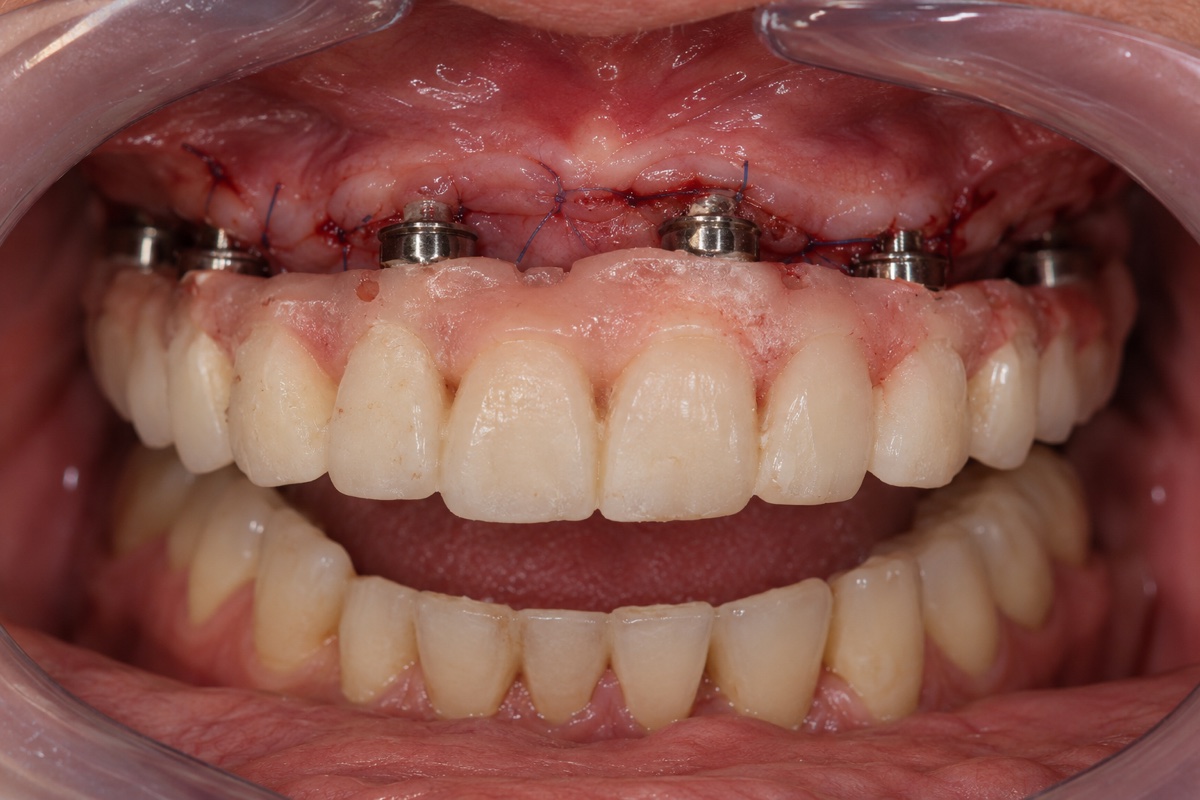
Where condition allows, a fixed temporary set of teeth can be fitted on the day of surgery, allowing you to leave with teeth while the implants heal.
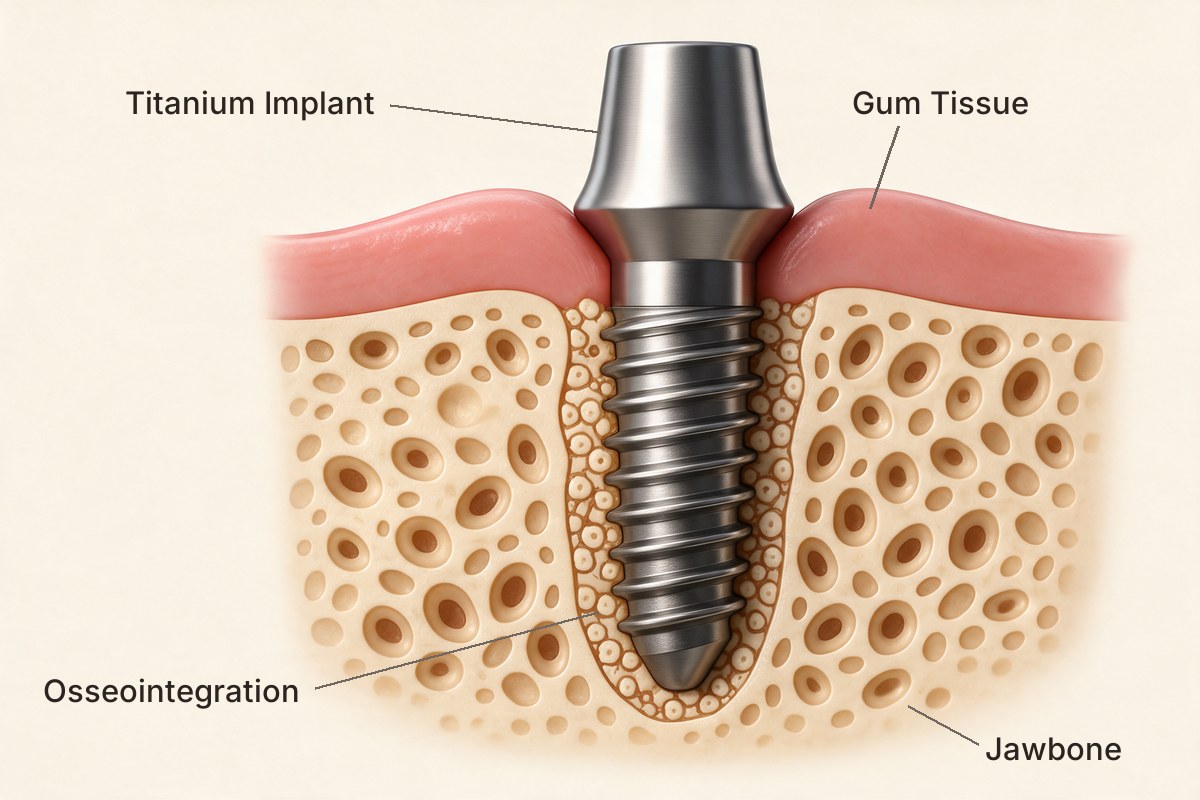
Over the following months, the implants gradually integrate with the surrounding bone while the gum tissues heal.
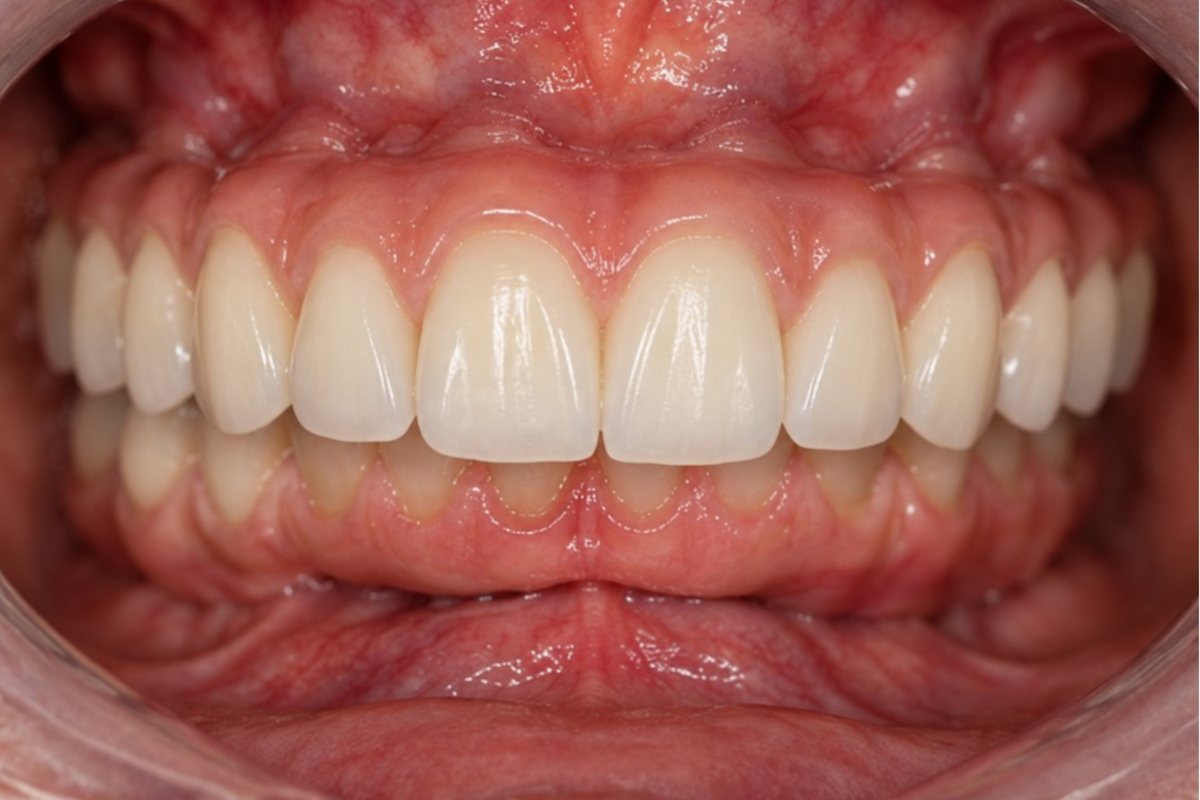
Once healing is complete, the final full-arch restoration is fitted, carefully designed for appearance, bite, function and ease of cleaning.
Every treatment journey is different. Your plan is tailored to your jawbone, bite and individual needs.
↗Ask about your planTake these to your dentist. A good answer to each one tells you a great deal about the plan being proposed.
Suitability depends on your remaining teeth, gum health, bone volume, bite and general health. A clinical examination and CBCT scan help your dentist assess the options.
Bone loss does not automatically rule out treatment. Depending on your anatomy, options may include bone grafting, alternative implant positions or a different treatment approach. A CBCT scan helps assess the available bone and determine which options may be suitable for your case.
Treatment usually takes place over several months. In suitable cases, a fixed temporary set of teeth may be fitted on the day of surgery, followed by the final restoration after the implants have healed and integrated with the bone, usually after around three months, depending on the individual case.
Surgery is usually done under local anaesthesia, so you should not feel pain during it, although you may feel pressure or movement.
Your new teeth can be designed around your face, smile, speech and bite. Your gums, lips and the amount of bone available can also affect the final result. Ask to see similar cases and discuss what may be achievable for you.
Daily cleaning around and beneath the bridge is essential. Your dentist may recommend a soft toothbrush, interdental brushes, super floss or a water flosser, together with regular professional reviews. The design should allow you to clean effectively at home.
Implants and the bridge are different components and may have different lifespans. With good hygiene and maintenance, implants can provide long-term support, but the bridge may need repair or replacement over time. Bite forces, smoking, overall health, materials used and ongoing care all affect longevity.
Like any surgery, All-on-X has risks. These may include infection, bleeding, nerve or sinus problems, implant failure, changes to your bite or speech, and the need for future repairs. The risks are different for each person. Your dentist should explain which risks apply to you before you decide to proceed.
Prefer to speak with someone? Our team is here to answer your questions.
☎+60 19 857 8829